
With so many page builders on the market, choosing the right one depends heavily on your workflow. Are you prioritizing raw developer control? Maximum third-party add-ons? Or streamlined speed?In this post, we take an honest look at Elementor, Bricks, Beaver Builder, SeedProd, and PixeBuilder to help you decide which tool fits your next project.
1. Elementor
The Ecosystem Giant
Elementor is arguably the most famous builder on this list. Its biggest strength is the sheer number of third-party plugins available.
The Good:
You can find a plugin for almost anything. The community is massive.
The Trade-off: Performance Bloat.
Because it caters to everyone, the code output can be heavy. To get top-tier speed scores, you often need additional optimization plugins or heavy caching.
Best For:
Beginners who rely heavily on third-party add-on packs.
2. Bricks Builder
The Performance Purist
Bricks has shaken up the market by focusing entirely on clean code and speed.
The Good:
It outputs incredibly clean HTML/CSS. It’s very fast.The
Trade-off: Steep Learning Curve.
The interface is closer to a coding environment than a visual builder. If you don’t understand CSS flexbox or grid concepts, you will likely struggle to use it effectively.
Best For:
Advanced developers who want code-level control and don't mind a complex UI.
3. Beaver Builder
The Reliable Veteran
Beaver Builder has been around for a long time and is known for being stable and developer-friendly.
The Good:
It rarely breaks sites during updates. It respects WordPress standards.
The Trade-off: Dated Experience.
The user interface feels a generation behind modern tools, and the feature release cycle is slower than newer competitors.
Best For:
Agencies maintaining legacy sites who prioritize stability over new features.
4. SeedProd
The Landing Page Focus
SeedProd started as a "maintenance mode" plugin and grew into a builder.
The Good:
It is excellent for setting up a single landing page or sales funnel very quickly.
The Trade-off: Design Limitations.
It lacks the granular styling controls and complex layout options required for building deep, custom, full-scale websites compared to the others on this list.
Best For:
Marketers building quick funnels rather than full custom websites.
5. PixeBuilder
The "Best of Both Worlds" Alternative
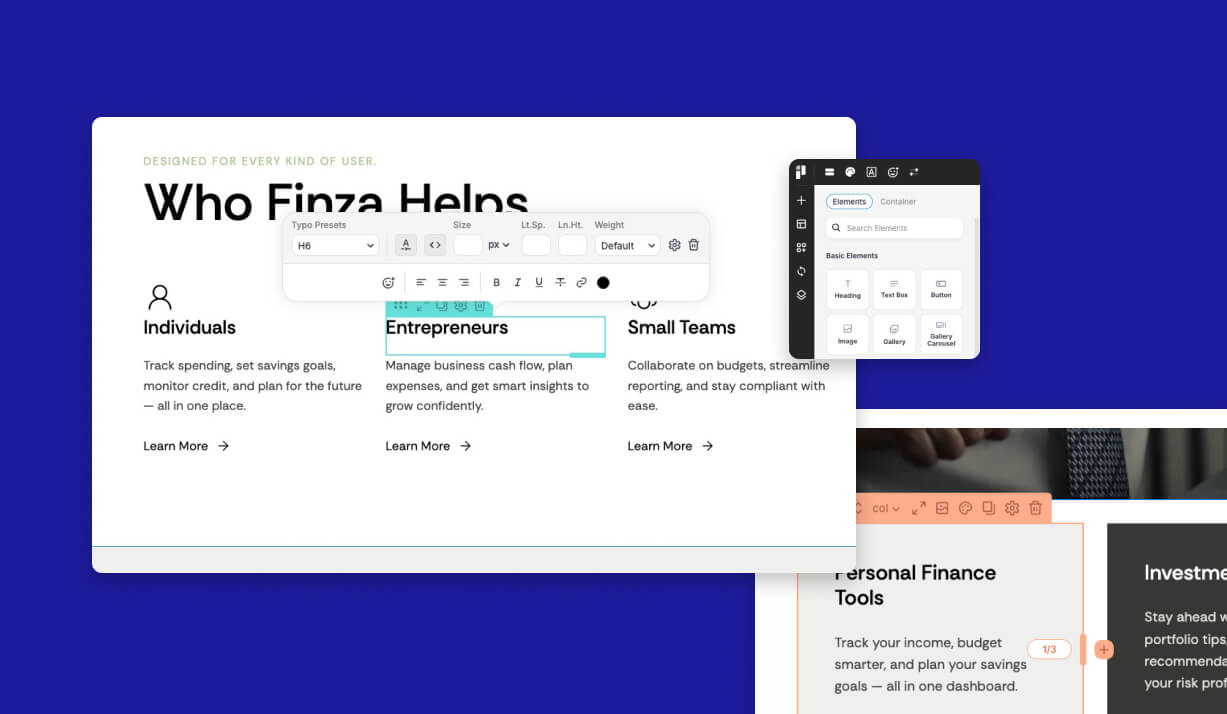
Developed by a team with 14+ years of WordPress experience, PixeBuilder was designed to bridge the gap between the builders listed above. The goal was simple: retain the intuitiveness of Elementor but achieve the lightweight performance of Bricks.
The Approach: PixeBuilder emphasizes efficiency. It offers a visual, drag-and-drop interface that is easy for non-coders, while the backend generates clean, optimized code.
Key Features:
- Speed & Performance: Engineered to be significantly lighter than traditional builders.
- Next-Gen Workflow: Features an innovative Dual Editor for unprecedented layout control, alongside professional tools like Synced Blocks (edit once, update everywhere) and dedicated Header/Footer/Popup builders (available in Pro).
- Built-in AI Tools: Generate engaging copy and custom, high-quality images on the fly with native AI content and image generators right inside the editor.
- Native Sliders & Carousels: Highly optimized slider and carousel containers are built right in, eliminating the need to weigh your site down with heavy third-party plugins.
- Massive Library: Comes with 400+ prebuilt blocks and 200+ prebuilt pages to speed up development.
The Trade-off: As a newer challenger compared to Elementor, the third-party ecosystem is more focused, though it supports major integrations like WooCommerce, Mailchimp, and more.
If you are tired of choosing between a slow site (Elementor) and a hard-to-use interface (Bricks), PixeBuilder offers the modern middle ground: fast, intuitive, and backed by 14+ years of theme-building expertise